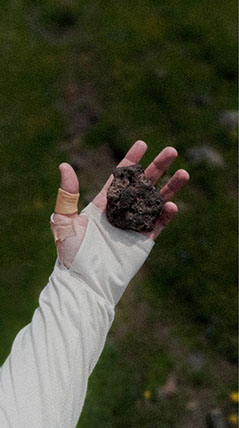
nomadic
body
(2026)
Creative process | Walking art | Photograph | Video | Drawing
Project supported by Walking Art Lab and held in Armenia.
WAL is an experimental research platform dedicated to walking practices through critical spatial thinking and questioning the boundaries between theory and practice.
\

In the volcanic depths of Armenia’s Gegham Mountains, the project "Nomadic Body" unfolds not as a mere trek, but as a ritual of immersion in the raw matter of the earth. Each step taken upon the rocky, basaltic soil — carrying the weight of a backpack that holds the bare essentials for days of survival — transforms the walk into a performance where body and landscape establish a tense and primal dialogue. The cutting altitude and the dry wind of the high pastures become the living stage for a poetics that refuses the comfort of the studio to embrace the inclemency of the real.
Walking as an artistic process asserts itself as a deliberate act of geographic and existential displacement. As he traverses the extinct craters and lava fields that compose this ancient plateau, the walker experiences a form of voluntary estrangement, where each kilometer covered displaces not only physical location but also the internal boundaries of perception. Displacement, here, is the creative method itself: to walk in order to get lost, and to get lost in order to rediscover the body as a territory of affection and resistance, challenging the contemporary fixity that binds us to stable coordinates.
The solitude of the crossing, however, is punctuated by profound ethnographic encounters with the Yazidis — groups of Kurdish origin who, for millennia, have practiced a semi-nomadic pastoralism across the Armenian high pastures. In crossing paths with these shepherds and their flocks, the work finds its human mirror: while my body-home carries modern camping artifacts — a synthetic tent, a stove, and industrialized rations — the Yazidis carry a living tradition of survival, where seasonal migration is not an aesthetic choice but the very breathing of the community, intertwined with wildflowers, late snows, and the immense skies of Gegham. This coexistence of distinct temporalities reveals that nomadism is not a relic of the past, but an urgent key to reading the present.
EN | PT
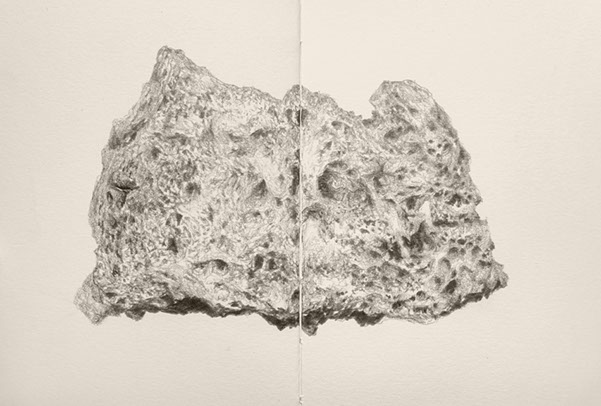
scoria | 2026
fieldwork documentation | drawing
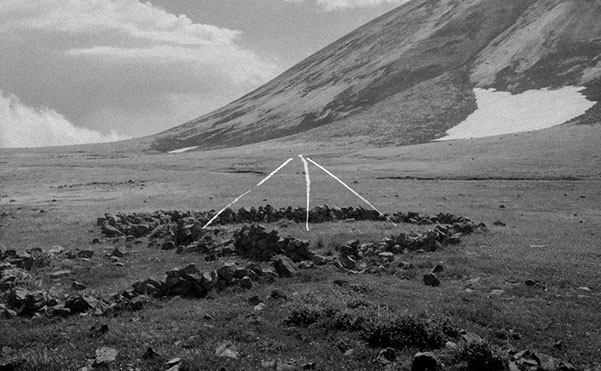
shelter | 2026
fieldwork documentation | photograph and drawing
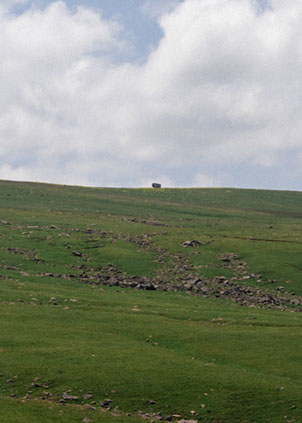
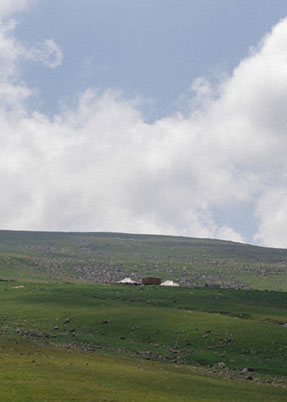
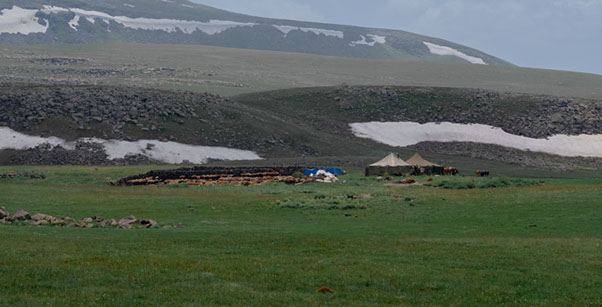
Yazidi settlements - groups of Kurdish origin who, for millennia, have practiced a semi-nomadic
pastoralism across the Armenian
high pastures.
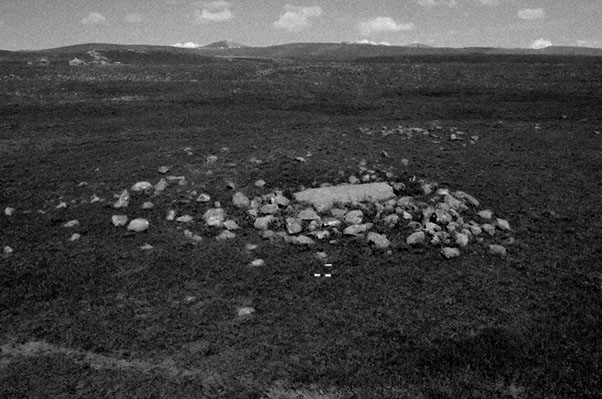
Ancient archaeological monuments known as Vishapakars (dragon stones), monolithic stone stelae carved in the Middle and Late Bronze Ages (24th to 13th centuries BC). They are unique to the Armenian plateau.
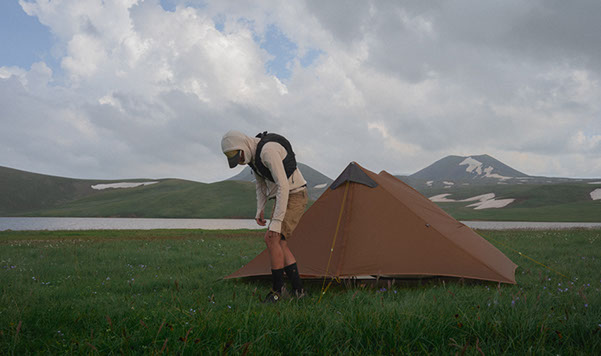
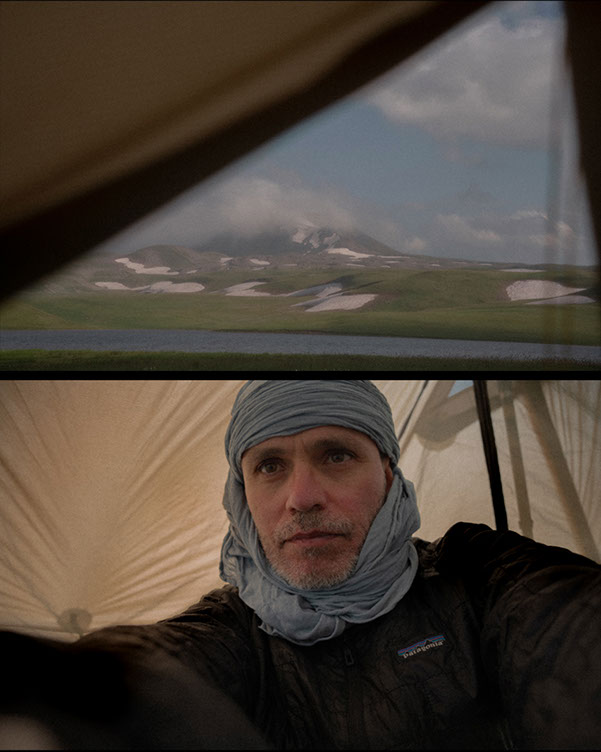
nomadic body | 2026
fieldwork documentation | photograph
nomadic body | 2026
fieldwork documentation | photograph
It is in this confrontation between ancestral nomadism and the contemporary journey that the central concept of the "body-home" emerges. The heavy backpack becomes an extension of the skin, and the tent canvas, the protective membrane pitched upon the cold lava at dusk. Yet, the true dwelling is not the equipment, but the weary musculature, the labored breathing, and the muscular memory of repeated steps. The nomadic body does not seek a home in the destination; it learns to inhabit its own movement, making perpetual displacement its only fixed territory — an ephemeral architecture of bones and tendons that moves with the daylight and withdraws into the darkness of the steppes.
Thus, "Nomadic Body" consolidates itself as a poetics of intimate migration, where the act of walking becomes a corporal writing upon the volcanic soil. By re-signifying the walk as a gesture of belonging without possession, the work proposes a reflection on the contemporary condition of the subject in transit — devoid of permanent roots, yet profoundly rooted in the experience of the path. In the Gegham Mountains, between the ancient silence of the stones and the ancestral voice of the Yazidis herding their goats on the slopes, the moving body becomes, at last, the very geography of the soul: a home that only exists as long as it moves.
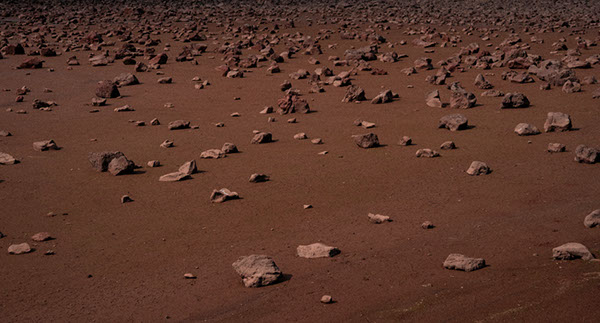
Volcanic fields - filled with reddish-brown cinder cones and reddish volcanic rocks.
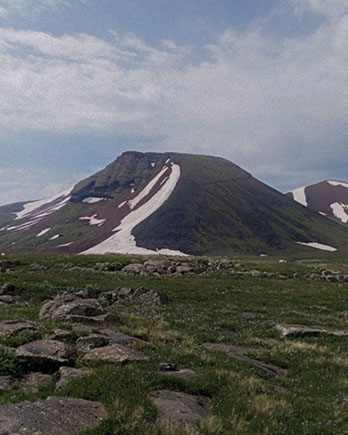
Azhdahak volcano - The highest point in the mountain range, 3,597 meters.